
Domestic passenger car sales grew by 23 per cent in December 2006 at 81,026 units as against 65,853 units in the same month a year ago.

PV registrations in this year's festive period stood at 287,717 units as against 333,456 units in the corresponding period last year, down 14 per cent. Two-wheeler registrations also fell by 13 per cent to 15,83,276 units as against 18,11,703 units in the year-ago period.

The company cited low demand in the second half of the year due to high interest rates, increased insurance cost and fuel prices for its downward revision

Tax evaders, BEWARE! The Income Tax department is using AI data analytics to bust fake deductions, flag HRA fraud, and trace digital footprints.

According to Society of India Automobile Manufacturers, the passenger car segment is now likely to grow by 9-11 per cent in 2012-13, instead of 10-12 per cent as projected three months earlier.
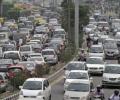
Vehicle sales have been hampered by weak consumer sentiment and still-weak availability of financing following tighter liquidity at non-banking lenders since the middle of 2018.

Tata Motors Chairman Cyrus Mistry said the company was poised for an 'inflection', even as it revamped its entire product portfolio.

Sales of commercial vehicles rose 5.30 per cent to 52,481 units in January this year, SIAM said.

Among other things, the agenda is likely to focus on increasing private investment, employment generation and giving relief to the farm sector
According to Society of Indian Automobile Manufacturers, domestic passenger car sales rose 8.99 per cent in January, while the two wheelers continued the downhill ride with 10.96 per cent decline in comparison to the corresponding month last year. Domestic passenger car sales in the country stood at 1,13,899 units as against 1,04,501 units in the same month last year, it said.

Maruti Suzuki, Hyundai, Mahindra and Toyota reported low single-digit sales growth for the month owing to weak market sentiment

The stock of commercial vehicle (CV) company Ashok Leyland is up 46 per cent in the past three months, gaining despite worries about a slowdown in sales volume. Brokerages have a mixed view on the country's second-largest medium and heavy commercial vehicle manufacturer. The company reported steady March quarter results and its valuation, focus on growth and medium-term prospects are positive, but some brokerages are cautious, given near-term demand concerns and the risk of competition increasing in the industry.

MSI said compact sedan Dzire Tour stood out as sales rose by over two-fold during the month under review to 3,370 units as against 1,299 in July 2014.

French auto major Renault on Wednesday said it will increase vehicle prices in India from next month to offset the impact of high input costs.

Scooters, once the fastest growing sub-segment, also declined for the second consecutive month in September.
Sales of passenger vehicles in India are likely to grow at 14.9 per cent each year to touch the 2.1 million mark by 2010.

Alto, the Maruti brand synonymous with small cars, introduced the new generation K10 on Thursday, aiming to consolidate its position further amid shrinking demand for hatchbacks. With prices starting at Rs 399,000 and going up to Rs 533,500 (for manual transmission), the new model claims fuel efficiency of 24.90 km per litre. The Japanese car maker, which has been selling 100 Altos every hour for the last 22 years, had discontinued the model in February 2020.

From setting up cutting-edge facilities to cater to the domestic market and building capabilities of global standards, the action is building up.

According to the data released by Society of Indian Automobile Manufacturers (SIAM), domestic car sales in October this year stood at 1,59,036 units as compared to 1,63,199 units in the same month of 2013.

Auto companies are now grappling with a slowdown in sales, triggered by pent up demand due to the COVID-led lockdown easing a bit and supply-side issues for raw material.

With Onam and Raksha Bandhan just around the corner, the festival season is ready to kick off in full swing. As people embrace the celebratory spirit, companies anticipate a surge in sales this year. Consumer durables firms are expecting strong growth of 40-50 per cent in the premium segment during the upcoming season. Appliance makers also foresee increased demand for cooling appliances - refrigerators and air conditioners - which were impacted by unseasonal rainfall.

'Now that all the early adopters have the electric car, governments are backing down in some countries because they do not have the money to subsidise so much.'

The growth rate could continue for another seven years.

7 Maruti models among top 10 best selling passenger vehicles in April

The growth in the PV segment was primarily led by car market leader, Maruti Suzuki India, which saw its dispatches to dealers grow 4.4 per cent YoY to 144,277 units after 10 months of drop. It was driven by new launches, such as the S-Presso, a mini sport UV.
An analysis of past 20 years' demand cycles done by Edelweiss Securities indicates that the auto sector is currently in the middle of a down cycle. Volume recovery, they say, is unlikely to be as sharp as in the past, unless there is strong fiscal support.

Two-wheeler exports from India have decreased by 20 per cent year-on-year (Y-o-Y) to 1.69 million units in the first half (H1) of 2023-24 (FY24) due to a challenging geopolitical situation and foreign exchange (forex) crises in key markets such as South Asia, industry body Society of Indian Automobile Manufacturers (Siam) said on Monday. On the other hand, passenger vehicle (PV) exports in H1FY24 increased by 5 per cent to 336,754 units because the key markets are much more diversified worldwide, Vinod Aggarwal, president, Siam, told reporters during a press conference. The Russia-Ukraine war, which started in February 2022, has brought significant instability to global fuel prices.
.jpg)
Sales of commercial vehicles rose 9.01 per cent to 51,000 units in December, SIAM said.

Proliferation of home chargers of around 7 KWh and above, which take six to seven hours to fully charge a car depending on the model, bring running costs down by a third or so. That, coupled with the increasing range of modern electric cars, can lead to a massive increase in sales.

We have a full blown epidemic, an economic recession with the highest unemployment in Indian history, and a powerful enemy whose aggressive and offensive actions we did not anticipate, states Aakar Patel.

This is the seventh straight month of growth

For the first time in history, the luxury car market is poised to cross the sales mark of 50,000 units in 2024, with Mercedes leading the way

While India is catching China in motorbike sales, it lags far behind in cars, which use more petrol per journey.
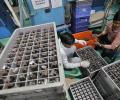
The automobile sector is considered a good indicator of economic health. It has a very long value chain, from primary materials, like metals, glass and plastic, to value-added high-end electronic components, specialised alloys, and software.

Investors should await consistent growth metrics before looking at an investment in the company.

The total vehicle registrations in India fell by 29.85 per cent to 1,52,71,519 units in financial year 2020-21, the lowest in the last eight years, the Federation of Automobile Dealers Associations (FADA) said on Monday. Total vehicle registrations were at 2,17,68,502 units in fiscal year 2019-20. All categories of vehicles, except tractors were in red in FY21 with two-wheeler (2W), three-wheeler (3W), commercial vehicles (CV) and passenger vehicles (PV) falling by 31.51 per cent, 64.12 per cent, 49.05 per cent and 13.96 per cent respectively -- the lowest in last eight years and way below the FY13 levels, FADA said in a statement.

This will ensure its vehicles reach dealers much faster and delivered to buyers in a maximum of three days, reports Shally Seth Mohile.
